_edited.png)
Venus Williams at 45, Still Playing, Still Rewriting the Rules of Power, Beauty, and Legacy

There is something quietly radical about Venus Williams at 45, still choosing to play. Not perform for nostalgia, not appear for ceremony, but play, fully, presently, without apology. At 45, in an era that treats time like a deadline for relevance, she moves with a different understanding of power. It is not speed alone, nor dominance, nor even victory. It is endurance, shaped by discipline, sharpened by solitude, and softened by the wisdom of a life lived in full view of the world. Her story has always resisted simplicity. Raised in Compton alongside Serena Williams under the unwavering vision of their father, she was built for greatness long before the world was ready to witness it. The courts were not just spaces of competition but of construction, of identity, of resilience, of a belief so unshakeable it bordered on audacity. What followed is already etched into history: Grand Slam titles, Olympic gold, a serve that redefined the geometry of the women’s game. Yet what feels most compelling now is not what she won, but what she sustained.

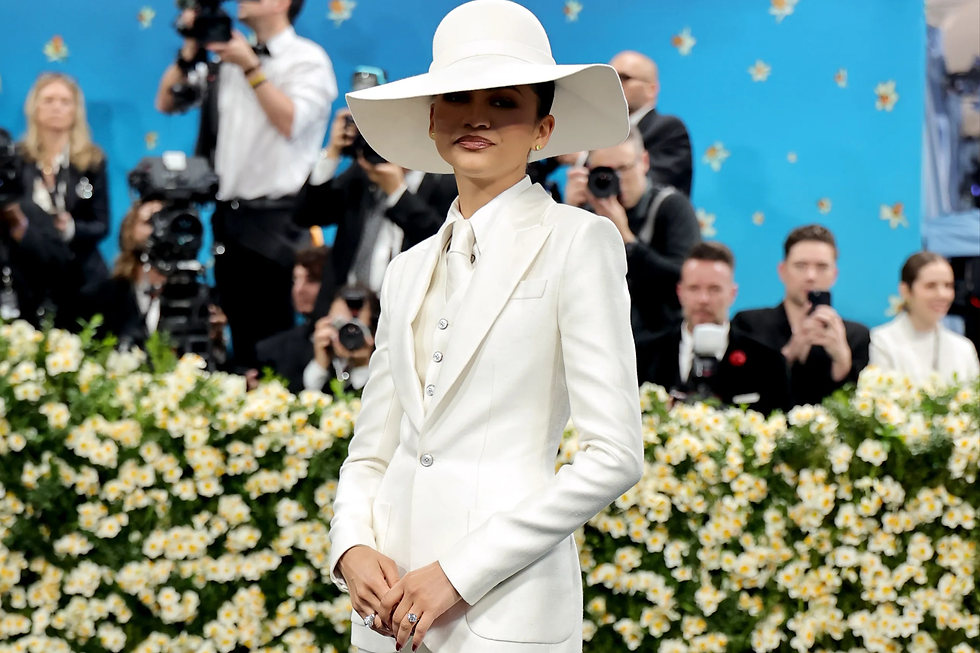
Time, for Venus, has never been an adversary. It has been a collaborator. While others fade into legacy, she expands within it, stepping between worlds with an ease that feels almost intentional. Tennis remains her axis, but it is no longer her only language. Fashion, once an extension of her presence on court, has evolved into a dialogue of its own, structured silhouettes, deliberate choices, and a refusal to disappear into expectation. As a co-chair of the Met Gala 2026, she occupies a space where the body becomes both canvas and statement, a theme that mirrors her own lived experience of being seen, judged, celebrated, and misunderstood.
There is a particular grace in the way she speaks about her body now, not as an object of scrutiny, but as a vessel of memory. This is a body that has endured victories and setbacks, public triumphs and private battles, including the quiet persistence required to navigate autoimmune challenges while continuing to compete. It does not perform perfectly. It carries truth. And perhaps that is what makes her presence so compelling today: she no longer seeks to prove anything. She simply continues.
Off the court, life has unfolded with a different kind of intimacy. Her marriage to Andrea Preti marks not a departure from her identity, but an expansion of it, a softening at the edges, a recalibration of rhythm. There is love, but also space. There is partnership, but also autonomy. It reflects the same philosophy that defines her career: nothing is rushed, nothing is forced, everything is chosen.
To watch Venus Williams now is to witness a new kind of relevance, one that does not depend on dominance but on depth. She is no longer the future of tennis, nor merely its past. She exists in a rare in-between, where legacy is not something she carries behind her, but something she actively shapes with every decision to show up again. In a culture obsessed with arrival, she embodies continuation. And that, perhaps, is her most enduring statement of all.


Comments